ollama vs LM Studio
By Herd Latch editorial team Current release, published September 14, 2026
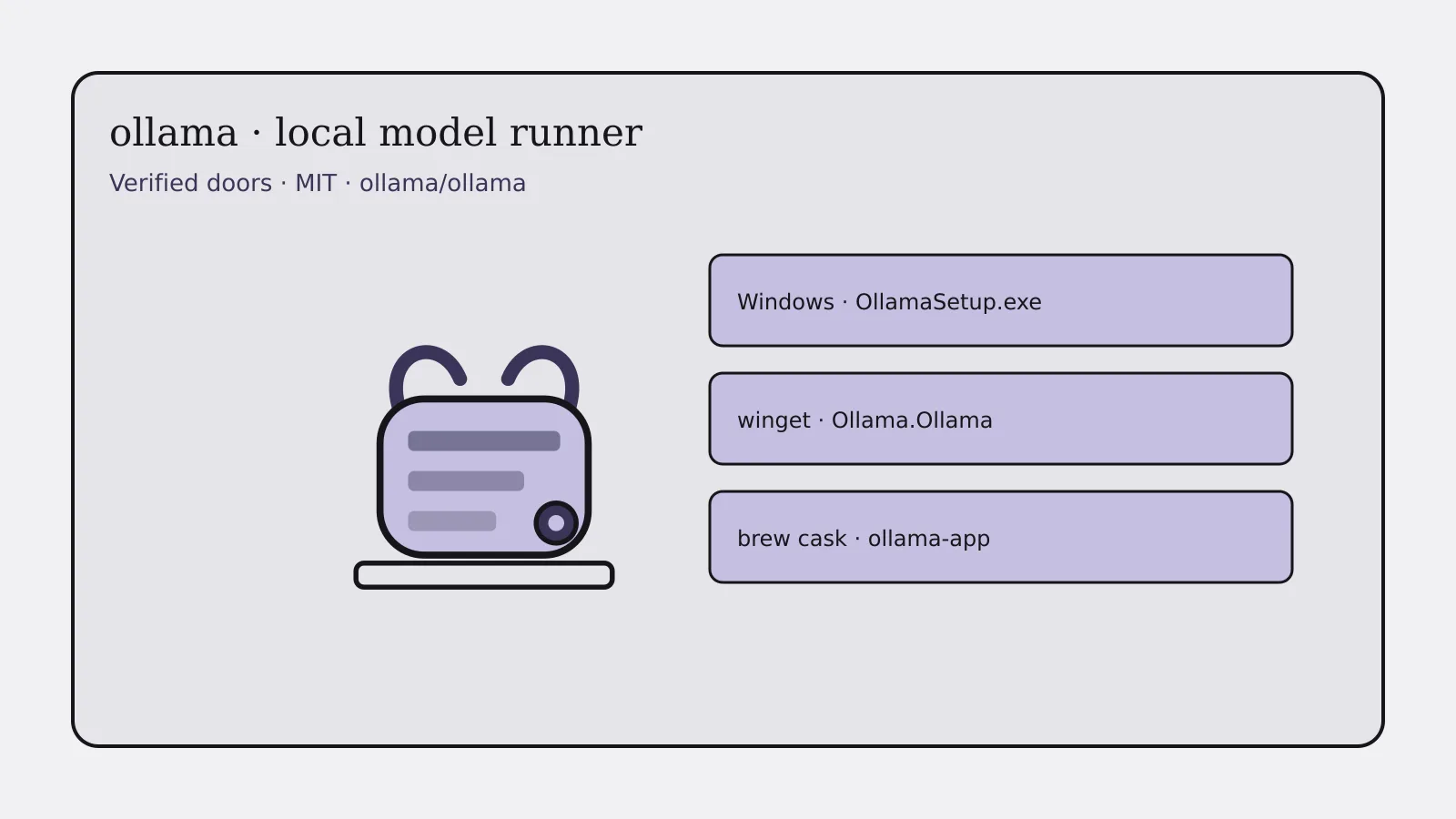
ollama vs LM Studio is a common choice when someone wants local models on a personal computer. the runner is MIT open source with Windows Setup.exe, winget, and brew doors. LM Studio is a proprietary freeware GUI focused on browsing and loading models visually.
Choose the runner when you want MIT source, official GitHub Releases assets, and everyday CLI commands such as ollama run. Choose LM Studio when a polished GUI catalog matters more than an MIT runner.
Opening doors
Install posture differs. the runner maps cleanly to winget the verified winget id and brew cask ollama-app. LM Studio distributes through its own site and channels; it is not the Windows Setup.exe path.
Both can run local weights. Neither replaces careful licence review of the models you download. Disk pressure is real on either stack.
Switching toward the runner is documented phrase-first: ollama: switch from LM Studio.
Prove steps
Related: ollama vs GPT4All, home, safety.
Labs that already teach shell habits often prefer the runner because prove steps fit existing terminal worksheets. Labs that avoid the terminal may prefer a GUI rival for first contact.
Networking defaults should stay local until policy reviews exposure. That advice applies to either tool.
Room notes
Update discipline matters more than brand loyalty. Pin a door and a tag, then upgrade on a schedule.
If your organisation requires OSI-approved licences for the runner itself, MIT the runner is the clearer paperwork path than proprietary freeware.
Performance depends on hardware and model size more than on the launcher brand. Prove the same tag on the same machine before you draw conclusions.
Herd Latch publishes this comparison to support the the runner install pillar, not to host either binary.
Lab checklist habits
Write the installer door beside the machine name before you image a room. Include whether winget, the Windows Setup executable, the Homebrew cask, or the Linux install script was blessed for that ring. Substitutes should not guess under pressure during the first week of term.
Prove one short CLI chat after every reimage. That single step catches vanished PATH entries, truncated downloads, and adware shortcuts that reappear from old browser folders. Keep a spare copy of the current Setup on trusted media when catalogs are flaky.
- Record the GitHub tag used for the golden image.
- Note free disk space before large model pulls.
- Keep the local API on loopback until network review says otherwise.
Support tickets that resolve faster
Ask for the operating system build, the door used, and the exact CLI error text. Vague reports that only say artificial intelligence feels wrong waste a day. Attach version command output when the user can copy it.
Proxy desks should test one model pull on a clean path once, then document any required exception. Offline classrooms should pre-stage weights on a well-connected machine instead of launching twelve simultaneous downloads on demo day.
Prefer official GitHub Releases, the verified winget package, and the verified Homebrew cask. Skip advertising mirrors that rename the Setup executable.
Update and rollback notes
Pick one update door per room and stick to it for a semester. Mixing winget, Setup, and brew without notes creates version drift tickets. Keep the previous Setup on trusted media so rollback is a file copy, not a scavenger hunt.
After an upgrade, prove a small chat again before you seal the image. Large experimental model tags belong on scratch accounts, not on the shared golden profile. Maintenance windows should remove stale tags so libraries do not grow without limits.
Related reading on this guide: the home install panel, the first-hour checklist, and the guides hub.
## Filename matching without drama Match the GitHub asset name character for character before you override SmartScreen or Gatekeeper. A mismatched publisher string is a reason to delete the file, not to click through faster. Advertising portals that wrap the same search intent with toolbars are the common failure mode. When bandwidth is limited, schedule the large Windows Setup download overnight and keep the browser shelf visible until the size matches what Releases shows. Partial files cause confusing launch errors that look like security drama but are often truncated bits.